Troll Toll: Bridge-Stomping Shenanigans of Scandi-Lore!

In the mist-laden landscapes of Scandinavia, where winters are white and mythologies richer than a troll’s purse, lies a peculiar fascination with trolls. These crusty, craggy giants have long held the curious occupation of guarding bridges. You might wonder why, of all places, bridges became their stomping grounds. Surely, a troll setting up shop by a cozy fjord with unlimited salted fish at its disposal seems far more comfortable. Yet, there's something undeniably mystical about these passageways—an intersection between the known and the unknown, the realm of humans and the world beyond. Here lies the blueprint for the comedic pranks and tantrums that unfold across Scandinavian folklore, tales that are more laugh-out-loud folly than spine-tingling terror.
Our jovial journey begins beneath the arches of these ancient structures, where trolls, more interested in napping and nosh-ups, often clash with cunning goats and audacious adventurers. It is not just the terrain that crafts these tales but the human tendency to embroider fearsome legends with a thread of humor. Trolls are quintessentially grumpy beings with a veneer of absurdity, often setting off on monumental misadventures triggered by their own ineptitude or laziness. Their larger-than-life antics provide endless amusement and an unexpected perspective into the ironies of power and intelligence—or rather, the lack thereof.
In this laughter-laden exploration, we step into an alternate reality where logic is tossed aside like yesterday’s leftovers, and imaginations run wild. What was it about these wily creatures, big as barns but twice as gruff, that managed to cement themselves into the lore of Norse culture? With craggy wit and rock-solid humor, prepare to discover the bridge-dwellers of Scandi-lore. It's time to cross that proverbial bridge and peek under it, where trolls, mirth, and myth scribe tales to shake not just the foundation of the bridges but the very core of Nordic storytelling.
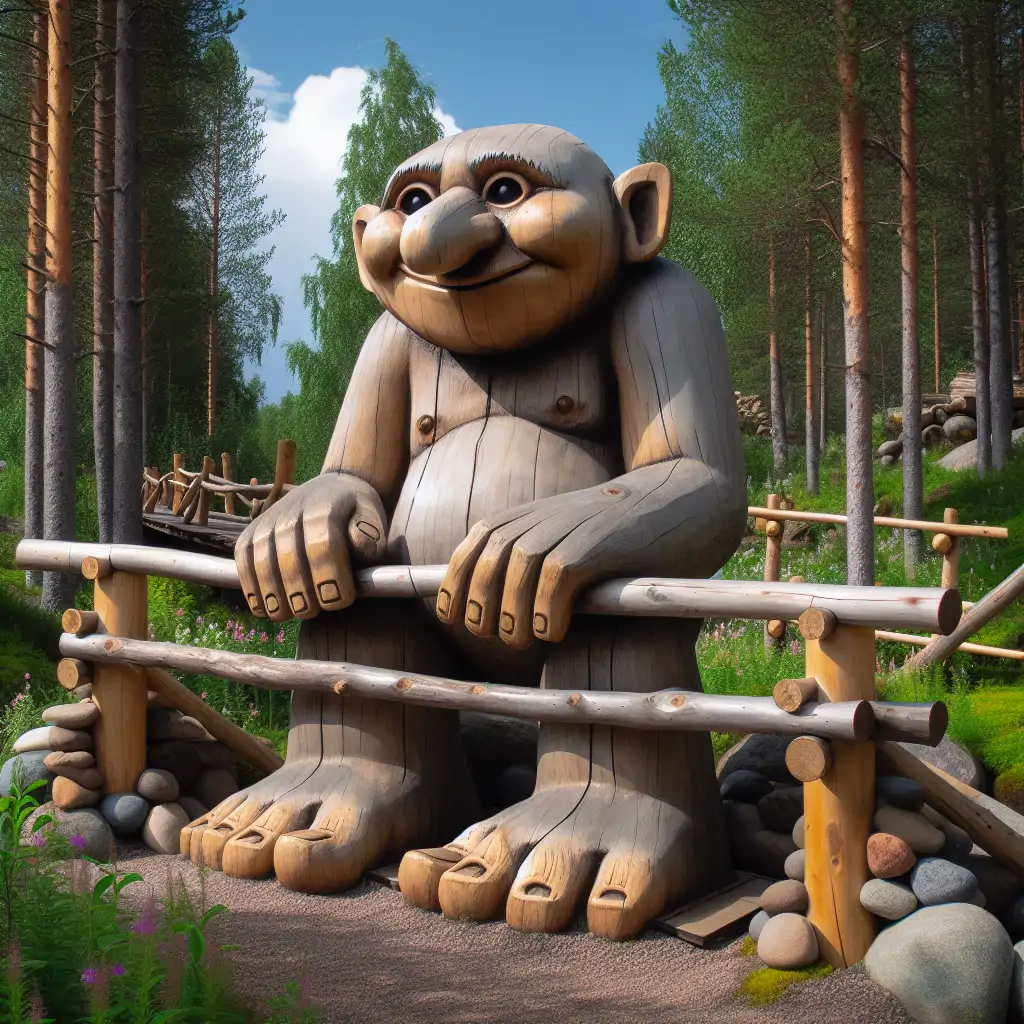
The wonder and whimsy of trolls begin at the bridges they notoriously guard. In Norse tales, bridges are enigmatic crossings, not just physical connections between lands but spiritual passageways between worlds. Trolls, with their rotund bellies and booming voices, serve as gatekeepers in these narratives. Their presence at these junctures represents obstruction and challenge—an amusing caricature of the obstacles one must overcome in life's journey. It's a dynamic setup for delightfully dithering encounters with humans and animals that often outsmart the lumbering giants, leading to hilariously humbling outcomes for our rocky friends.
One of the most beloved tales that celebrate the bridge-dwelling troll is that of 'The Three Billy Goats Gruff.' This folktale showcases how a trio of goats, ranging from wee to whistle-worthy large, bravely confronts what could only be described as a troll with size issues. As each goat attempts to cross the bridge to reach the luscious grass on the other side, they encounter the roaring menace. The troll, ever so foolish and consumed by hunger, demands a meal of goat. The goats, however, have a trick up their hooves. They propose to the troll that their larger counterpart follows behind, and he buys it, hook, line, and sinker every time, until the largest goat boots him into oblivion.
This enduring faction of trolls is often depicted as dim-witted, serving as grand entertainment for audiences of all ages. Unlike their human cohabitants who cherish wit and whimsy, trolls rely on their ample brawn, which unfortunately tends to let them down in more intellectually demanding situations. Despite their size and presumed threats, trolls, quite honestly, lack the cerebral panache to best even farm animals—hilariously endearing traits that make them unforgettable.
Trolls have also played memorable roles in tales featuring hardy Norse heroes. Legends abound of legendary feats where trolls incredibly miscalculate their own abilities against mere mortals. Take, for instance, the folklore surrounding Thor, the god of thunder himself, renowned for his quick wit and mighty hammer, Mjölnir. As legend tells it, a troll once challenged Thor at a bridge, supremely confident, believing brute force was unbeatable. Thor, however, employing both strength and astute acumen, made short work of the troll, turning the encounter into a delightful spectacle of strength versus skill.
When not guarding bridges, trolls often find themselves entangled in bizarre escapades, some as absurdly mundane as culinary experiments gone awry. Yes, indeed, trolls in several Scandi-folkloric tales have ambitions that extend into the kitchen! Their clumsy attempts at cooking emphasize their lack of sophistication, resulting in comedic chaos not unlike the lovable bumbling of slapstick comedy. Imagine a hulking troll attempting to perfect a centuries-old recipe for Lutefisk, only to find they have underestimated the pungency while accidentally cooking their own toe in the process! Such ridiculous imagery is the bedrock of troll humor found throughout the myths.
Their less-than-stellar culinary skills showcase how trolls are consistently a source of schadenfreude, their gross incompetence a delightful reminder of their imaginary status and amusing banality. Despite their size and outward ferocity, trolls are often portrayed as the underdog, favorably humanized through these amusing tales. They are a reminder that might isn't always right and that brains can often outmatch brawn. These tales, in turn, are not just for amusing storytelling but also moral lessons cleverly disguised as hilarity.
Additionally, trolls have a noteworthy penchant for vanity and self-indulgence, traits leading them to inadvertently comedic doom, time and time again. Norse folklore is rife with tales where trolls, enamored with mirrored reflections or the allure of shiny objects, end up inviting their own fate. A specific legendary trick recalls sunlight being lethally transformative for trolls if caught bathing in its rays. An egotistical troll, distracted by his own reflection in a nearby stream, loses track of time and becomes petrified in stone—a literal rock solidification of that age-old conceit.
This recurring theme, where vanity ushers trolls towards their downfall, resonates with a universal theme present in nearly every culture's mythology. They serve not only as side-splitting figures but as a potent reminder against over-indulgence and hubris. It is precisely through these ridiculous oversights that trolls generate laughs and nods of understanding, cementing them not just as characters of myth but of meaningful amusement.
For audiences encountering these myths today, whether under cozy fireside stories or educational curricula, trolls steadfastly remain compelling through their unwitting ability to teach important life lessons, almost in direct opposition to their own attributes. They are classic cautionary figures, though exhibiting primitive ambitions, they beautifully mirror human flaws in their escapades. Their bumbling adventures serve as timely reminders that even the simplest of creatures have much to impart on human understanding, wrapped in rib-tickling charm.
Norse mythology often features trolls dabbling in classic treasure hunts, forever seeking the elusive and unattainable prize—a side door into the enchantment of the fantastical. Ironically, more often than not, trolls are outwitted by the clever, resourceful men or women who strategically divert the treasure from beneath their craggy noses. Stories of hidden treasures laughed over a shared ale in Scandinavian taverns capture the ingenious sleights of hand and the trolls’ unfaltering gullibility.
Perhaps the most charming aspect is the trolls' iconography richly captured in Scandinavian artistry—even today. Their looming figures carved in wood, exaggerated grimaces in stone, and whimsical illustrations in literature invite both fear and fondness. The cultural significance of trolls extends beyond mere folktales, embodying the whimsical ethos intrinsic to Scandinavian identity. They are not just fearsome creatures but symbols of age-old traditions where the natural world holds the power of enchantment, humor, and a little self-deprecation.
From sodden valleys to snow-capped peaks, trolls became both a paradoxical nemesis and a companion in storytelling. While some tales call forth their more fearsome elements, others wield them as tools of timeless slapstick humor. Trolls waddled through both terrifying nightmares and ubiquitously lighthearted fables, revealing much about how fear intersperses with frivolity and how both intermingle in Norse imagination.
There’s an illustrious practicality to presenting trolls through a humor-laden lens. The accessibility of their stories through laughter exemplifies how cultures perpetuate oral traditions, intertwining historical significance with an engaging communal inclusiveness. These narratives dispel any misconceptions that trolls are merely brutish terrors—they are truly wondrously idiosyncratic characters conjoining historical gravity with a delightful levity.
What cemented trolls as catalysts rife for amusing fables was not solely their appearances in tales but the human propensity to engage with larger-than-life stories. It’s no secret, humanity loves leaning into the absurd and favoring the frivolously bizarre elements of lore to connect with the ineffably entertaining facets of fear. The characters of trolls pivot from petrifying beasts to memorably jovial participants via the seasoned storytelling art passed down from Scandinavian ancestors.
It’s integral to appreciate how culture creatively transmutes these mythical beings into humorous icons rather than just dwelling on the frightening. Such transformation signifies a uniquely Scandinavian knack for balancing spookiness with silliness, crafting stories teeming with whimsical oscillations between laughter and fright. It's this creative genius that endows the trolls with their enduring generational charm, ensuring they remain etched into the folklore’s perennial jester roster.
Yet, trolls are not merely supportive characters—they inspire a wide-reaching mystique, an essential cog in the grander machine of Scandinavian culture and folklore. Within the lush fabric of their lore, trolls are relentless purveyors of merriment and moral mischief, endlessly intriguing audiences with their unpredictable blend of misadventure and merriment. Their near-ubiquitous presence attests to the necessity of their roles as tricksters and teachers in equal measure.
In retelling the vividly painted escapades of trolls, each story rekindles the human penchant for humor married perfectly with fear. It matters little that trolls were primarily woven from folklore because their tales resonate poignantly with fundamental human truths, the dual quests of desire and aversion that diligently surface within adventures rich with layers of folly.
The phenomenal staying power of troll legends is a testament to their adaptability within context — stories shape-shifting as cultural priorities and humor evolve through epochs. Their stories, rich with unintentional hilarity and consequence-free peril, have perpetuated discourse, ensuring trolls remain ingrained within collective Scandinavian consciousness.
Suppose we explore how each troll tale brims with hope, not merely as far-fetched fantasy but as intrinsic components of human action and resolve. In that case, we find the singular distinction of Scandinavian mythos: the acceptance of shortcomings, whether personal or mythological, balanced with mirth and the sheer thrill of storytelling. This underlying principle of contextualizing imperfections with humor is precisely why trolls, in their many shapes and forms, passionately endure.
Stories of trolls harbor potent philosophical intents packaged in light, palatable formats, not just age-old amusement but reflections of human preoccupations. They underscore the importance of self-awareness, wit, and resolve against pretentious opposition, articulating that despite colossal odds, cleverness often prevails in style. Reinforcing at every turn that trolls, though gargantuan in stature, offer formidable lessons in simplicity and shrewdness, making their tales richly rewarding and endlessly entertaining.
Norse folklore dances through every troll-tale with a vivacity that breathes life into mythical recollections, reminders that the world, magical or otherwise, is ours to explore and laugh alongside. Delving into troll-laden stories offers not only timeless entertainment but an embrace of cultural nuance that carries resonate humility, humor, and humanity—embodied harmoniously through epic tales under legendary bridges.
Crafting a landscape enriched by troll lore, one journeys through towering giants and towering laughs. Our furry*, rock-bothered friends bridge storytelling both mythological and contemporary, casting echoes of ancient Scandinavian customs across time, captivating generations with tantalizing symbolism and belly-fulls of laughter.
Many might still wonder why, of all the vastness available, trolls industriously devote time to bridge looming. Simply put, bridges symbolize unchartered journeys, and by placing whimsical sentinels at their fore, tales beckon us to embrace the wonder of non-conformity. Encountering a troll beneath your crossing invites an invitation—not into danger but the exuberant unknown, a reminder of life's adventures interwoven with humor and mystery.
To appreciate trolls is to connect deeply with the imaginative traditions stemming from nature and wonder. Therein lies the heartbeat of Scandinavian folklore—a union between reality and fantasy where bridges don't merely connect lands but lead into laughter-rich realms fraught with cautiously optimistic humor.
Engaging with these myths encourages reflection on how stories not only craft reality but invite youthful discovery, even within adult minds. Whether undershaded by trolls or illuminated by Nordic twilight’s wisdom, these tales continue celebrating life quirks—distinct fixtures in the Scandinavian folklore whose timeless bridges, continually guarded, convey humor's resilient heritage.
Finally, one must celebrate the tireless endeavor encapsulated within the troll-tale tradition. Scandinavians honor their bridges and the trolls that oversee them, honoring wit, whimsy, and guile—beloved characteristics etched into every generation's narrative canon. Obeying no single definition, trolls exuberantly uphold storytelling gremlin-duty, boundless absurdity laid bare beneath Nordic skies.
Those engrossed in Scandinavian tales find implicit joy in girdled paths replete with trolls, overflowing with laughter and learning. Trolls' farcical antics transcend mere fable, drawing upon the dauntless, infinite faith in humor to rise above shadows. Whether lurking conspicuously beneath bridges or bustling through pleasurable misadventures, trolls remain here victoriously—a reminder that in every tale, joy, imagination, and laughter shall triumph.
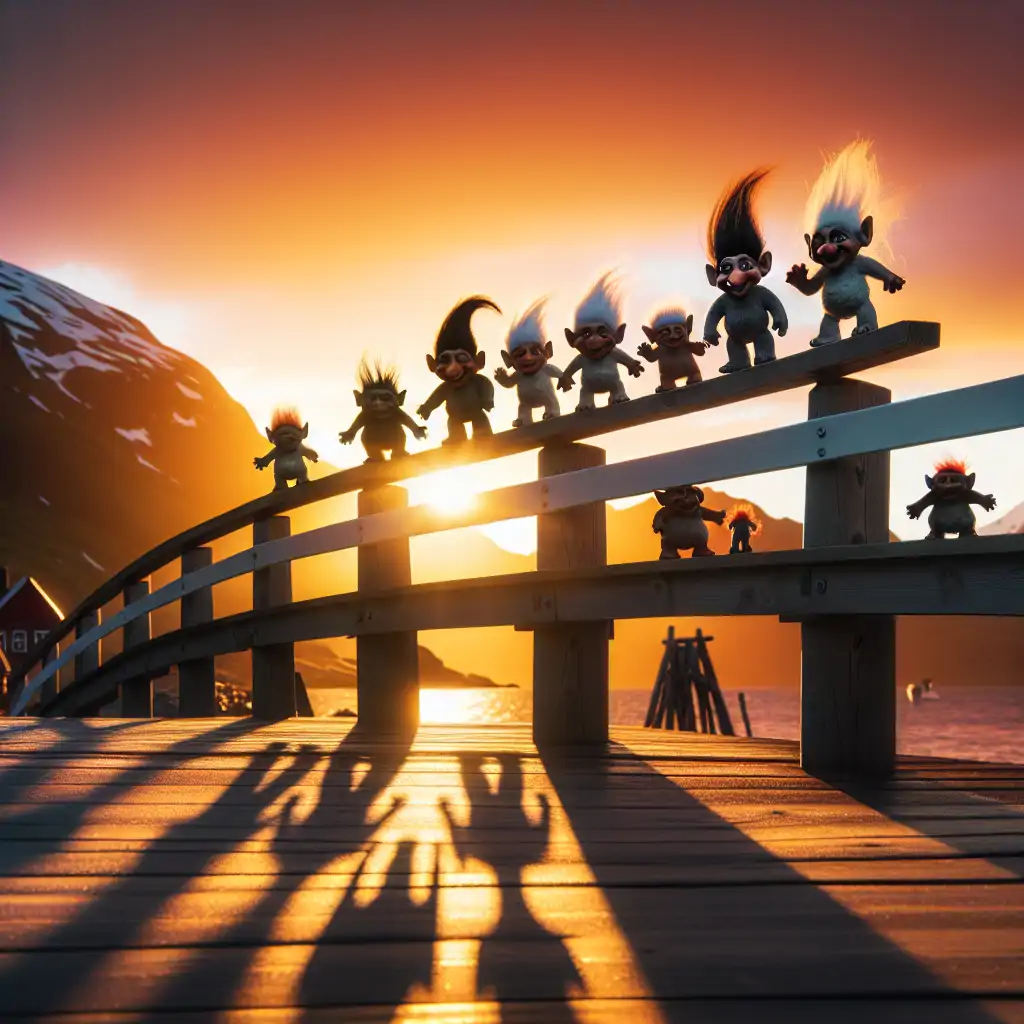
The charm of Scandinavian trolls lies not in their brutish appearances but within the uproarious tales that unfold beneath the bridges they ponder. These legendary sentinels are far more than adversaries; they’re joyful journey-makers, reminding storytellers of all ages to revel in the lively humor nestled in folklore. Their presence is a testament to human creativity, weaving horror with hilarity into a tapestry that sparkles with mischievous sagas. This distinct interblending of whimsy and terror offers an opportunity to explore life’s proverbial crossings with renewed vigor and a laugh at the ready.
A delve into the world of trolls invites readers into an epic, laughter-infused realm where the unlikely feats of goats and mortals triumph over the cumbersome capacities of trolls. This dichotomy echoes human history's eternal love affair with imagination and the fascination with larger-than-life escapades. Enshrined within these stories are legacy-rich lessons, ingeniously cloaked as comedic blunders, forever infusing wonder into the cultural landscape. These wonderfully odd adventures stand as moral pillars, embodying audacious creativity and becoming cherished accomplices to every storyteller fortunate enough to embrace their existence.
As these myths persist, they continue crafting bridges from generation to generation, each with a soul reaching forth with color and contour, humor and heart. Embrace the mythical world shining behind their tales—a pathway heightened by mirth and Scandinavian splendor. Trolls, though crusty and craggy, ensure that the art of storytelling never runs dry, urging us to laugh, remember, and wander freely into the destined dreams preluding the grand crossings beneath our feet.
Thanks for taking the time to read my article! You may also find this one interesting.
Yeti Yarns: Himalayan Hilarity on Ice!Til next time! Prijanka

Prijanka
Prijanka is a wellness coach and inspired blog writer. Drawing from her expertise in holistic health and her talent for motivating others, she writes insightful articles that empower readers to live healthier, more balanced lives, blending practical advice with a genuine passion for well-being.
A proud member of the B-Team
If you're curious to dive deeper into related topics, then you may find these external links useful.
1. Scandinavian Trolls History
An exploration of the history and cultural significance of trolls in Scandinavian folklore, providing insights into their roles and symbolism in mythological tales.
https://scandification.com/exploring-the-mystery-of-scandinavian-trolls/2. The Three Billy Goats Gruff Story
A detailed look at the classic folktale 'The Three Billy Goats Gruff,' highlighting the narrative's themes and the significance of its comedic elements.
https://interestingliterature.com/2021/06/three-billy-goats-gruff-fairy-tale-summary-analysis/3. Norse Mythology and Folklore
A comprehensive resource on Norse mythology, discussing various mythical creatures including trolls and their place in Scandinavian stories and culture.
https://mythologyworldwide.com/the-mythical-creatures-of-norse-mythology-dragons-trolls-and-more/4. Trolls in Scandinavian Art
An examination of how trolls are depicted in Scandinavian art, showcasing sculptures, paintings, and other artworks that capture their whimsical and fearsome nature.
https://nlsnorwegian.no/unraveling-the-secrets-of-norwegian-troll-mythology/5. Mythical Bridges and Passageways
An analysis of the symbolic importance of bridges in mythology as transitions between worlds, featuring discussions on trolls as guardians in these stories.
https://nlsnorwegian.no/unraveling-the-secrets-of-norwegian-troll-mythology/©2023 - 2026 SP Software Solutions Ltd. All rights reserved.