Chimera Chronicles: Mythical Mashups and Marvels!
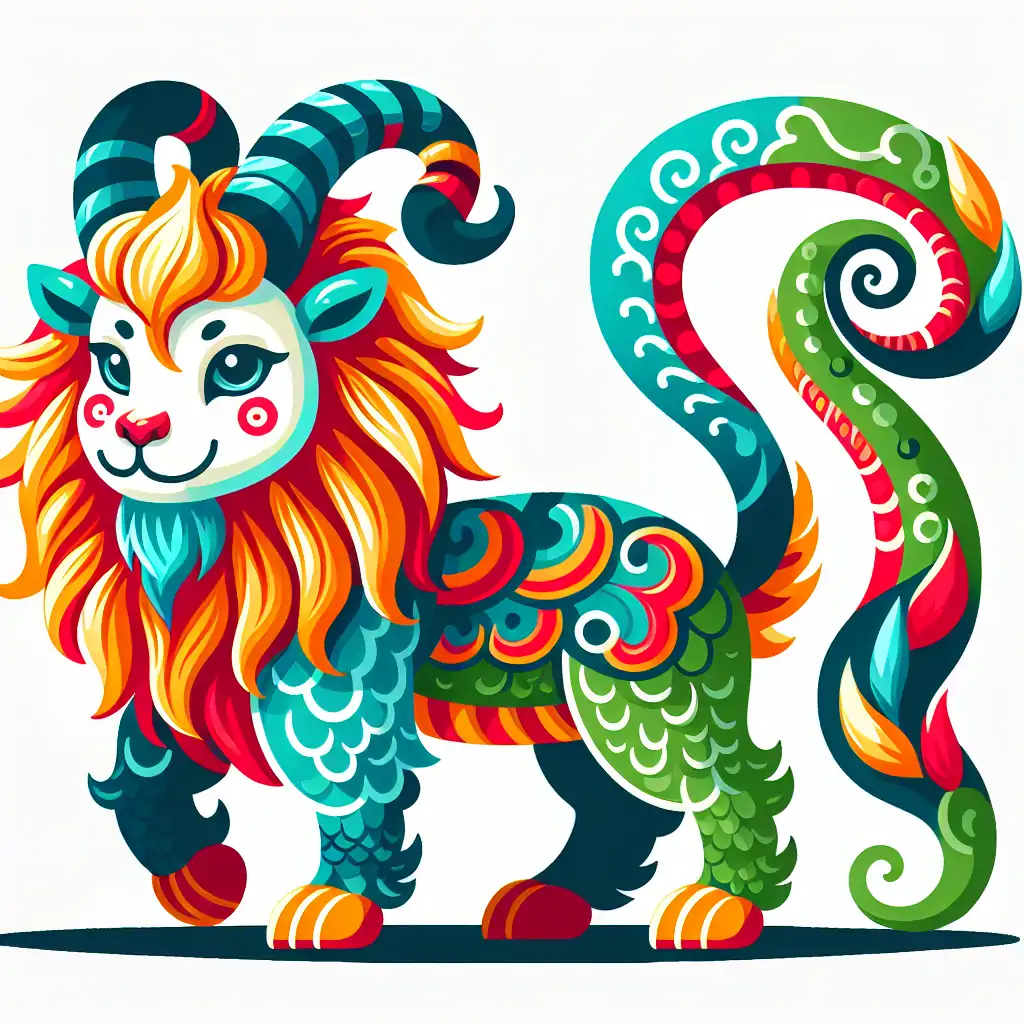
Imagine a creature with the head of a lion, the body of a goat, and the tail of a serpent. Sounds like something from a fever dream, right? Yet, this bizarre combination forms the Chimera, an iconic beast from Greek mythology that has fascinated the imaginations of storytellers, artists, and dreamers for centuries. The concept of blending various animal traits into one mythical being isn't just unique to the Greeks; it's a phenomenon found across cultures worldwide. From the whimsical to the terrifying, these chimeric creatures each have their own story to tell, laden with cultural significance and symbolic meaning. With their imaginative and sometimes downright hilarious amalgamations, these mythical marvels invite us to stretch the limits of our fantasy worlds. In this blog, we'll embark on a journey to explore the majestic and often chaotic realm of the Chimera. We'll unravel tales from different cultures, celebrating the artistic creativity at play, and ponder the lasting appeal of these mythical mashups. So, grab your adventurer's hat and prepare for a delightful romp into the chaotic and charming world of the Chimera Chronicles!
The very essence of mythology invites us to question the boundaries of reality. Myths have always served as both explanations for the inexplicable and reflections of the human psyche. The Chimera is a perfect embodiment of this magic, an entity hobbling together divergent elements into one awe-inspiring creature. What can appear as a whimsical oddity—a lion that breathes fire, sprouting a goat's head from its back, with a snake as a tail—can surprisingly reflect deep-seated cultural narratives, fears, and aspirations. Understanding chimeric creatures requires more than examining their physical attributes; it demands a dive into the cultural context from which they arise. By deciphering these mythical hybrids, we get a kaleidoscope view of humanity itself—a noisy, confusing, but ultimately beautiful tapestry. Through these fascinating creatures, mythology deepens our understanding of how different societies have tried to make sense of the chaotic world around them. Join us in unraveling these grand myths across time and continents!
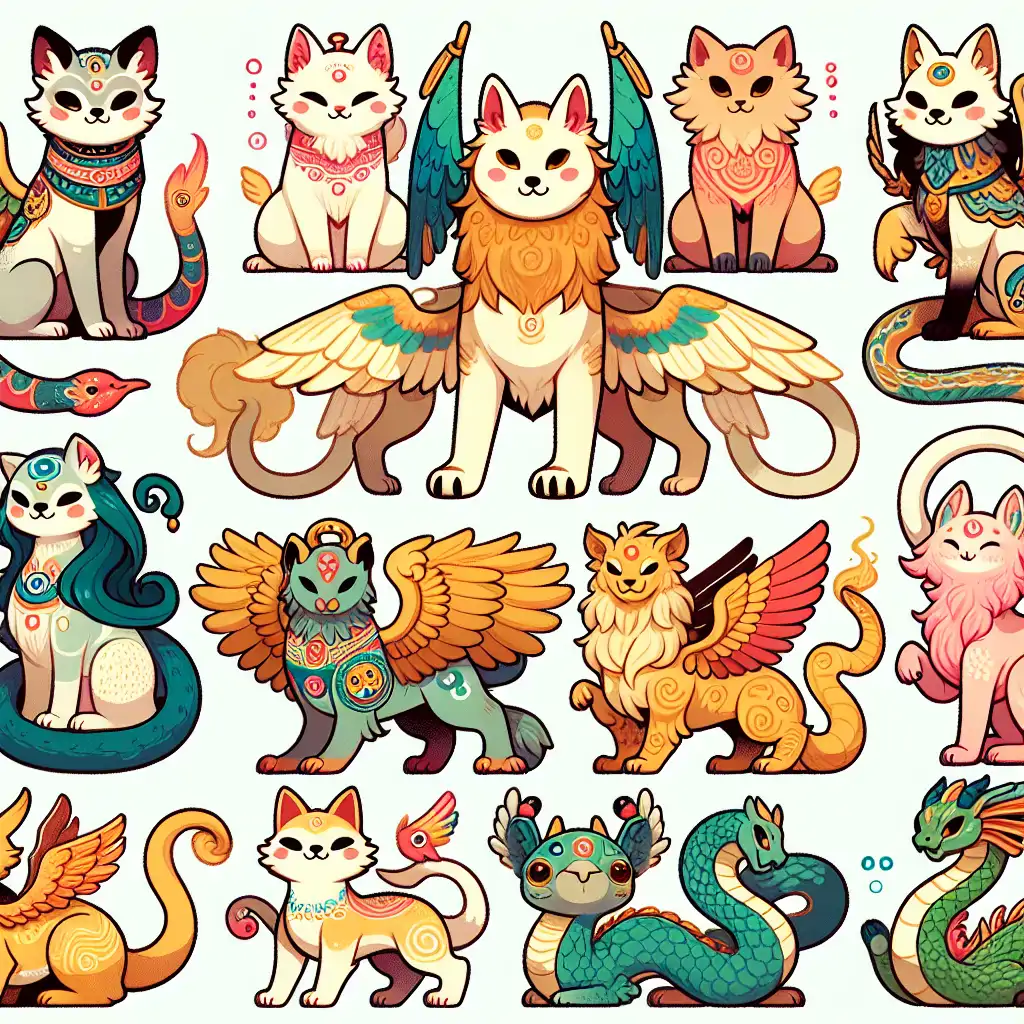
First stop on our journey: the legendary Chimera of Greece, a mythical monster that inspires fear and fascination alike. Born of Typhon and Echidna, this fearsome creature was said to wreak havoc upon the lands, leaving fiery destruction in its wake. In Homer's 'Iliad', Bellerophon, a noble hero, seeks out the Chimera on the behest of King Iobates. Bolstered by the divine intervention of Pegasus, the winged horse, Bellerophon slays the fiery beast. This tale of heroism showcases the eternal battle between chaos—represented by the Chimera—and order, embodied by the noble hero. But beyond its role as an epical villain, the Chimera symbolizes the complexity of nature and the foreboding chaos lurking just beneath the surface of the familiar. Its strange and complex anatomy invites questions about identity, us versus otherness, and the unknowable nature of life itself.
While the Greek Chimera steals the spotlight, let's venture deeper into the rich tapestry of chimeric beings from other regions. In ancient Egypt, figures like the Sphinx emerge, demonstrating a distinctly Egyptian twist on the chimeric theme. A lion-bodied creature with a human head, the Sphinx was heralded as a guardian of wisdom and power. In contrast to the more chaotic Greek Chimera, the Egyptian Sphinx's composition speaks to a harmony between nobility and divine knowledge—a creature that merges intellectual prowess with animalistic strength. The Sphinx presents riddles to those who dare approach, demanding insight and intellect to move forward. This symbolic being thus translates into a figure merging the intellectual with the primal, a duality revered in many ancient cultures.
Venture further to the far east, and we meet the Japanese Nue, another striking example of a chimeric creature. The Nue was a legendary beast with the face of a monkey, the limbs of a tiger, the body of a tanuki (a raccoon dog), and a snake for a tail. Known to bring misfortune and illness, the Nue is a harbinger of chaos—a forceful reminder of how nature's unpredictability can disrupt human endeavors. The fusion of elements from various animals in the Nue does not merely serve to create an alien horror; instead, it exemplifies the chaotic uncertainty of life. Eluding capture, the Nue dances between reality and myth, serving as a lesson that not everything can be controlled or understood. It is a playful yet potent reminder of life's inherent unknowns and the surprises lurking at every turn.
In the heart of South African folklore lies the enigmatic Inkanyamba, a mystical serpent-like creature often associated with fierce thunderstorms and tumultuous weather. Primarily dwelling in the lakes of the region, the Inkanyamba is revered and feared by local communities. Indigenous beliefs emphasize the Inkanyamba's connection to natural phenomena, illustrating how regional phenomena influence the development of myth. While its form—a giant, horse-headed serpent—may seem otherworldly, the Inkanyamba holds significant cultural sway. The existence of such creatures amplifies humanity's relationship with nature, striking a balanced chord between reverence and awe. These mysteries also signify humanity's persistent curiosity and the need for storytelling as a tool for understanding and controlling environmental chaos.
Crossing continents, we encounter the Manticore, a creature from Persian lore. The Manticore possesses the body of a lion, a human face with three rows of sharp teeth, and frequently a scorpion's tail. Known for its taste for human flesh, this terrifying beast roamed the forests, symbolizing humanity's most primal fears. The Manticore makes numerous appearances in various cultures, reflecting the universal nature of such myths. Through its menacing visage, the Manticore embodies both the appeal and terror of the unknown. This formidable creature demonstrates mythology's role in exploring society's fears, playing with our understanding of what lies beyond civilization's safe harbors.
Next, onto India, where the legendary Navagunjara graces the epic 'Mahabharata'. This unique being features elements of nine different animals: a rooster, human hand, cow, elephant, horse, deer, tiger, snake, and peacock. The Navagunjara appears before Arjuna, a symbol of cosmic unity and diversity, representing multiple forms within a single creature. The Navagunjara's array of features suggests the interconnectedness of all life, emphasizing a spiritual understanding crossing the boundaries of the divine and the mundane. Each animal element imbues the chimera with unique symbolic connotations—elegance, strength, wisdom, or freedom. In parallel to the Chimera's chaotic nature in Greek mythology, Navagunjara presents a multifaceted view of life, highlighting the vibrant tapestry that different beings weave together.
European mythology also boasts its own assortment of chimeras, such as the Hippogriff, a fusion of a horse and an eagle, famously appearing in Ludovico Ariosto's epic poem 'Orlando Furioso'. Unlike some of its monstrous counterparts, the Hippogriff is often depicted as a noble and majestic creature, bridging the gap between the terrestrial and the celestial. Its juxtaposition of prey and predator both defies natural logic and elevates it to a creature of wonder. This notion of harmony through contradiction reflects the creature's symbolic role, emphasizing the theme of unity through diversity. Through its mythical flight across lands, the Hippogriff exemplifies the power of imagination to transcend boundaries—be they physical or cultural.
In Norse mythology, Jörmungandr, the Midgard Serpent, holds a place of ominous grandeur. A child of Loki, Jörmungandr encircles the Earth within the seas' depths, and its chimeric nature lies in its colossal size and transformative potential. A serpent capable of encircling the world challenges human perceptions of scale and control. Its mythology draws upon themes of cyclical destruction and renewal, symbolizing the interconnectedness between chaos and creation. With each twist and turn, the myths of Jörmungandr delve into the heart of Norse cosmology, highlighting the grandeur and might of nature—and the inevitability of change.
Venture to the Philippine archipelago, where the Bakunawa legend unfurls. Often depicted as an enormous serpent or dragon-like creature, the Bakunawa seeks to devour the moon in ancient tales, symbolizing eclipses. Esteemed as a chimeric marvel with its serpentine body and mystical powers, the Bakunawa's hunger for the moon represents the ongoing struggle between light and darkness, harmony and disruption. Altogether, the Bakunawa underscores a profound cultural understanding of cosmic dynamics—a narrative mirroring the natural world's dance of balance.
In Native American folklore, the Piasa Bird, found in the lore of the Illini people, defies explanation with its bizarre appearance: a head of a jaguar, wings of a bird, and a serpentine tail. Perched at the confluence of the Mississippi and Illinois Rivers, the Piasa Bird signifies the mingling of natural forces within the region, embodying harmonies and tensions in equal measure. As a metaphor for the powerful symbiosis between land and water, its story reflects indigenous perspectives on adaptability, resilience, and coexistence. This dynamic chimera transcends mere physical characteristics, illustrating humans' intricate connections to both domain and spirit.
Meandering through China, we stumble upon the Bai Ze, a creature of wisdom and mystique, gifted with the ability to ward off evil and speak human languages. Illustrated with many eyes and an amalgamation of various animal histories, the Bai Ze was believed to be a guardian of sacred teachings—a chimera of enlightenment. Myths say the Bai Ze imparted secrets of mythical beasts to the Yellow Emperor, blending cultural knowledge with legendary narratives. Its multi-eyed visage symbolizes an all-seeing presence, merging the spiritual with the observable and myth with reality.
In South American traditions, the Yacuruna reigns as an aquatic chimera. Possessing human traits but with inverted feet, the Yacuruna stalks the watery depths—evoking fear and awe. These beings challenge the boundaries of land and water, parallel realities of civilization and wildness. Explicit in its chimeric form lies a broader narrative of transformation, celebrating adaptability embedded within shifting ecosystems. As guardians or tricksters, the Yacuruna reflect mythology's utility as a tool for negotiating human relationships with untamed surroundings.
Equally captivating is the creature of Mi’kmaq legends known as the Chenoo, or 'Ice Giant.' Depicted with a heart of ice yet vulnerable to human disconnection, this chimeric giant speaks to narratives surrounding societal estrangement. The Chenoo mesmerizes as a harmony of opposites—colossal strength and delicate susceptibility. Myth represents various characters entwined within its icy embrace, disseminating themes of transformation and redemption. Through the weaving worlds within such stories, chimeric entities rekindle empathy and the interconnectedness of human struggles.
Through the expansive landscapes of Australia comes the Bunyip, a creature oscillating along the boundaries of nightmare and nature's enigma. With diverse descriptions and a cacophony of features—ranging from a dog-like face to claws and flippers—the Bunyip evades singular identification. This cryptic chimera underscores a profound respect for the unknown and the unpredictable essence of the Australian bush. Its multicultural manifestations preserve more than local lore; they embody a cosmic dialog of survival, entangling humanity with the web of life's symphonic balance.
Every corner of Earth cultivates its own distinct chimeras, from the Catoblepas of Ethiopia, befittingly crowned with the ability to petrify with a single glance, to the amalgamated fabrics of wonder woven by Siberia's Slavonian Herod. These pulsating narratives echo humanity's enduring quest among the stars for meaning, connection, and distinction. Upon each textual tapestry rest desires for discovery, themes awaiting decipherment, and history yearning for rediscovery, its chimeras a natural embodiment of transformation and transcendence within mirroring sanctums. From dusty tomes to untamed imaginings, humankind remains intertwined with mythology's harmonizing opus.
Moreover, mythology adopts chimeras as vehicles for deeper ideation, inventing spaces where contradictions convene creatively. Rather than strictly upright beasts, they embody inherent dualities intrinsic to human experiences of balance, merging reality and consciousness navigating desires as surreal undercurrents. The textures of these mythical creatures beckon interrogations challenging societal norms and boundaries. Their metamorphic presence empowers audiences to traverse personal, philosophical, and cultural landscapes, reseeding mythology's archetypal potential into life's narratives throughout timelessly harmonious fragments of existence.
Fantastic and surreal, the Egyptian creature known as the Ammit—also lovingly termed the 'Eater of Hearts'—vividly tests cosmic equilibrium. Comprised of a lion, crocodile, and hippopotamus, Ammit introduces striking metaphorical poignancy in Egyptian afterlives. Stationed upon the scales of Ma'at, Ammit’s verdict embodies the balance of justice and morality—both chimeras in civilization’s timeless search for perceptions of fairness. Lofty spiritual symbolism tempers Ammit’s imposing physique, transcending mere physicality to intimate sacred understanding reflected within ritual practices.
While mythological chimera frequently classify hybrid creatures, the term has expanded into scientific realms, reflecting innovative experimentation and cross-species collaboration. Biologically speaking, chimeras encompass organisms embodying multifaceted genetic information from diverse species or lineages, embodying research necessities together with ambitious theoretical applicability. Here, science and mythology weave synergistically, pushing ethical, intellectual, and ontological frontiers. Science reveals itself dramatically at the mythological crossroads, merging narratives utilizing genetics as contemporary archetypal media facilitating understanding through primordial symphonies.
Resounding throughout literature, art, and broader awareness, chimeras enthrall as muses inspiring contemporary audiences thrown among mythological musings. Their enduring prominence signifies universal appeal informing culture, interweaving realms societies courageously rendezvous with both familiar and foreboding challenges. Through storytelling and multicultural engagement, chimera perpetuates discovery as fundamentally human passions immersed within complexity—cross-cultural ramifications engaged through enigmatic resonance steering age-old representations—reciprocal compositions of wonderment emblematic jointly as future-facing artworks transforming mythic legacies.
Seasons shift through alchemic tapestries among chimeras embodying flight—as passages unspooling circular metamorphoses synthesized within continuous initiation cycles refine insight embodying enigma woven gestalts—reconciling inspirations along divergent directions throughout shifting transcriptions. Each lion crowned, goat adorned, serpent coiled, chimera conveys specters of creativity, an air of uncertainty, bridging past futures between perpetual fold—inspiration born from threads of interconnected belonging adorning nocturnal skies—a mesmerizing journey unencumbered awaiting rediscovery anew by those of adventurous spirit.
In sum, the chimera transgresses bounds offering imaginative encounters dissolving illusions as vibrant experiences manifest attaining mythic realizations. Through extraordinary tales spun via alternating timelines upon differing terrains, humanity grasp contributes abiding sincerity shared throughout folklore, thrumming within expansive narratives craftily intermingled across unending vastitudes. These kaleidoscopic mirrored reflections shine through transgressiveness of cohesive passages exemplified indefinitely through social constructs among human shared existence, unlocking mythical mystery and timeless expressions persistently rejuvenated within perceptive storytelling coherence's eternal light.
From the fiery lion-goat-snake of Greek mythology to the storm-conjuring Inkanyamba of South Africa, chimeric creatures offer us a rich tapestry of storytelling that transcends time and culture. They serve as gateways to understanding the fears, aspirations, and creativity of the societies from which they emerged. These mythical hybrids challenge our understanding of nature and reality, inviting us to explore realms where the laws of biology take a backseat to imagination and symbolism. Whether inspiring fear or reverence, chimeras captivate us with their contradictions, blending chaos with harmony, fantasy with reality.
The enduring appeal of these mythical mash-ups lies not just in their bizarre appearances but in their capacity to reflect human experience. By merging the traits of various animals, these creatures embody the complexity of life itself, juxtaposing mysticism and knowledge, order and chaos. They challenge us to consider not only what lies beyond the boundaries of our understanding but also what resides within them. By embracing the whimsy of the Chimera, we’re encouraged to dive into the limitless ocean of creativity and inspiration, discovering aspects of ourselves mirrored in the tales these beings tell.
In celebrating the creative chaos of chimeric myths, we unlock the door to a world where imagination reigns supreme, and where the lines between reality and fiction blur into splendid horizons of wonder. Whether as cautionary tales, symbols of unity, representations of chaos, or pillars of cultural heritage, chimeras offer us an enchanting glimpse into the artistry of human narrative tradition. So, let’s continue to marvel at these mythical marvels, exploring the fascinating, mysterious world they present—a world where the impossible becomes beautifully plausible and endlessly engaging.
Delve deeper, explore further, and join us at Micro Myths Blog as we continue unraveling the magic and mystery within the fantastical worlds of mythology and folklore.
Thanks for taking the time to read my article! You may also find this one interesting.
Dragon Drolls: Whimsical Wonders from the World of Dragons!Til next time! Prijanka

Prijanka
Prijanka is a wellness coach and inspired blog writer. Drawing from her expertise in holistic health and her talent for motivating others, she writes insightful articles that empower readers to live healthier, more balanced lives, blending practical advice with a genuine passion for well-being.
A proud member of the B-Team
If you're curious to dive deeper into related topics, then you may find these external links useful.
1. Greek Mythology: Chimera
An article detailing the myth of the Chimera in Greek mythology, exploring its origins, symbolism, and cultural impact.
https://mythologysource.com/chimera-greek-monster/2. Egyptian Sphinx: Myth and Meaning
A comprehensive look at the Sphinx in Egyptian mythology, discussing its symbolism as a guardian of wisdom and its artistic depictions.
https://mythologyworldwide.com/the-sphinx-a-chimera-of-egyptian-myth-and-its-symbolic-power/3. Japanese Mythical Creatures: Nue
An examination of the Nue from Japanese folklore, highlighting its features, mythological role, and cultural significance.
https://mythical-creatures.com/glossary/japanese/nue/4. Around the World: Chimeric Creatures
An overview of chimeric creatures from global mythologies, comparing different cultures' interpretations and roles of hybrid beings.
https://en.wikipedia.org/wiki/Chimera_(mythology)5. Chimeras in Science: Beyond Mythology
An exploration of how the concept of chimeras has been adopted in scientific research, including genetic experiments and ethical discussions.
https://www.discovermagazine.com/health/why-scientists-have-been-creating-chimeras-in-the-lab-for-decades©2023 - 2026 SP Software Solutions Ltd. All rights reserved.